The battle of consistency Vs Intensity
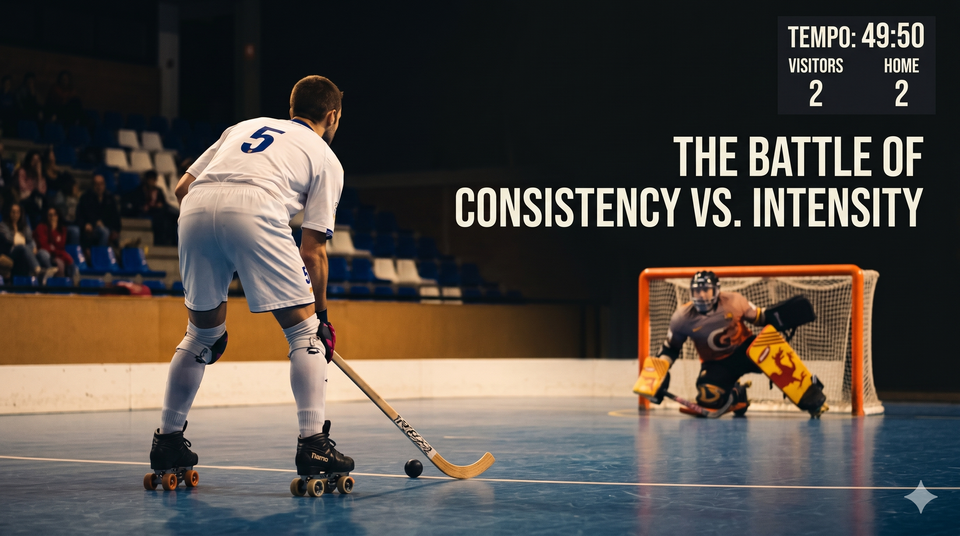
It is fascinating to see how the performance of an elite team changes depending on the competition. Not the competition itself, the format of the competition. It is quite obvious isn’t it? Yet, for many people it is not. For a lot of different reasons.
Whether we are talking about a home-and-away league, a knockout tournament, or a play-off hybrid, the format dictates the soul of the game.
The home and away league, the marathon
In my humble opinion, this is the purest test of a squad’s depth. It rewards the most consistent team by requiring them to face every opponent twice. While every win is vital, you can occasionally afford a slip-up. This "buffer" allows a team’s true potential to surface. We all experience peaks and troughs throughout a season; the beauty of this format is that the average performance is what counts. For top-tier teams, sustainability is the ultimate goal.
The knockout tournaments, the Sprints
Knockout formats serve a different purpose: pure spectacle. The stakes are higher because there is no tomorrow, but this often makes teams more conservative. Managers often prioritise "not losing" over "winning", avoiding risky tactical decisions because the consequences are terminal. Since these tournaments usually happen over a short window, recovery times are squeezed. You might see elite teams slowing the tempo just to conserve energy for the next round. In short, the winner is still the best, but it’s often the team at their absolute physical peak that takes the trophy.
Play off or two-legged tie, the hybrid
These are different competitions, but the system feels similar: a league stage followed by a knockout stage. It tries to combine both worlds. While the league phase brings that "average" performance into play, the final knockout stage (whether it's a best-of-three series or a two-legged tie (home and away))brings back that sudden-death pressure. Even with the consistency of a full season behind you, everything can still be decided by one bad night on the floor.
As an Sport Lover
Knockout stages are simply amazing. More show, more emotion, more drama—especially when you have multiple high-stakes games in a single weekend. Even as a player, the feeling is incomparable. You can feel the intensity in the air. Let’s be honest, we all get a bit of a "high" when we perform and win under that kind of pressure. It’s what we live for.
As an Analyst
From an analytical perspective, knockout stages are a different beast. Teams usually change their game plan entirely. While the regular season is about consistency, a knockout stage often forces a shift to a "safety-first" approach. It is so evident that you can see the tactics change between halves.
Teams with highly developed tactics and cohesive team play often abandon their identity. Putting their usual, expansive tactic on the floor is often seen as too risky against an opponent ready to pounce on a single mistake.
The Bench Factor: A Controversial Reality
This brings me to a crucial point: squad depth. Roller hockey is incredibly fast. Giving a player more than seven minutes straight is a recipe for disaster. No matter the name on the jersey, a player will not perform at 100% if they are on the floor for more than 20 minutes in total.
If a coach keeps a star player on for longer, one of two things is happening: either the bench player is significantly weaker, or the star is not giving 100% to save energy, meaning they have a privilege over others. I have seen teams where only five players could maintain the required level, facing opponents who could rotate eight.
In a league match, you might get away with a short rotation. But in a knockout tournament—perhaps playing your fourth game in a week—it is a disaster waiting to happen. A "gassed" player makes terrible decisions.
This is where the quality of coaching shines. A great coach works to "raise the floor," narrowing the gap between the stars and the bench. An opportunistic coach focuses only on the top tier, widening that gap. You might survive a league season with a top-heavy squad if luck is on your side regarding injuries. But in knockout formats, that physical and tactical imbalance will almost always be the reason for failure.
Member discussion